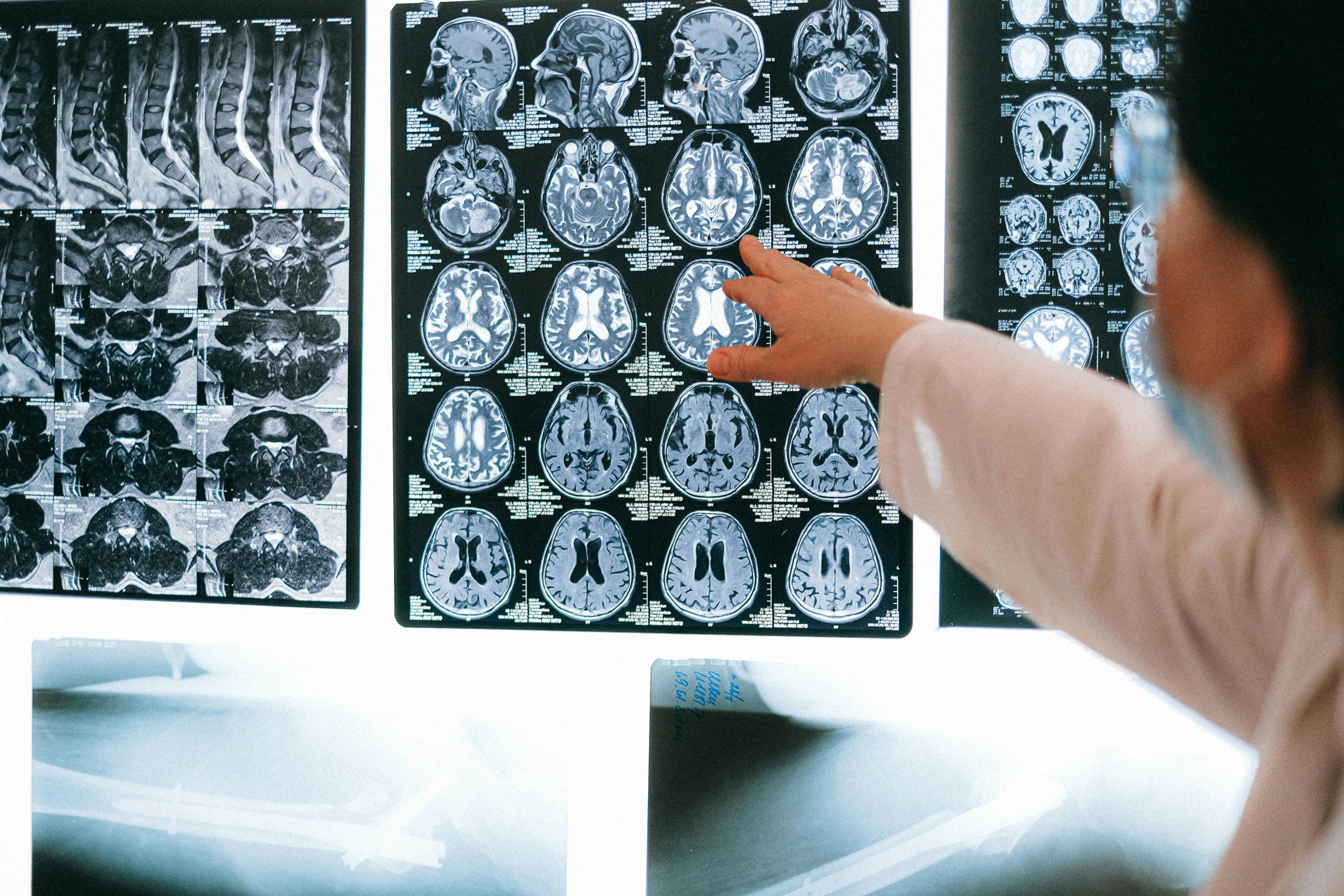
100% of human brains tested contain microplastics. Including yours.
Nihart et al., Nature Medicine, 2025
How much are your habits contributing?
Find out how much →What is "body burden"?
Body burden is the scientific term used by toxicologists and the CDC to describe the total accumulation of environmental contaminants in the human body. It reflects lifetime exposure — not just what enters today, but what persists in tissues and organs.
Microplastics have been detected in human blood, lungs, liver, kidneys, and — most recently — in arterial plaques and the human brain. Researchers note that current ingestion estimates are likely a significant underestimate, as many exposure pathways remain unstudied.
Three habits that drive the most exposure
Real numbers from peer-reviewed studies
Released per cm² of polypropylene container during 3 minutes of microwave heating
Hussain et al., Environmental Science & Technology, 2023
Released alongside microplastics from the same container in the same 3-minute microwave session
Hussain et al., Environmental Science & Technology, 2023
Released into food from a plastic cutting board through normal daily use
Environmental Science & Technology, 2023
Found in the human body
Peer-reviewed studies have confirmed microplastics in the following tissues. Detection does not prove causation — health effects remain an active area of research.
Plastic particles found in 58% of arterial plaque samples. Those with microplastics in plaque had 4.5× higher risk of heart attack, stroke, or death.
Marfella et al., NEJM, 2024
Microplastics found in all brain samples tested, at higher concentrations than liver or kidney. Levels rose significantly between 2016 and 2024.
Nihart et al., Nature Medicine, 2025
Detected in 85% of live human lung tissue samples, including deep in the lower lobes where the body cannot easily expel them.
Jenner et al., Sci. Total Environ., 2022
Found in 100% of semen samples tested. More polymer types correlated with significantly lower sperm count and reduced motility.
Zhang et al., eBioMedicine, 2024
Detected in 77% of healthy volunteer blood samples, confirming microplastics circulate throughout the body via the bloodstream.
Leslie et al., Environ. Int., 2022
Microplastic fragments found on both the fetal and maternal sides of human placentas, the first evidence of fetal-adjacent exposure.
Ragusa et al., Environ. Int., 2021
From the blog
Science-backed guides on microplastic exposure

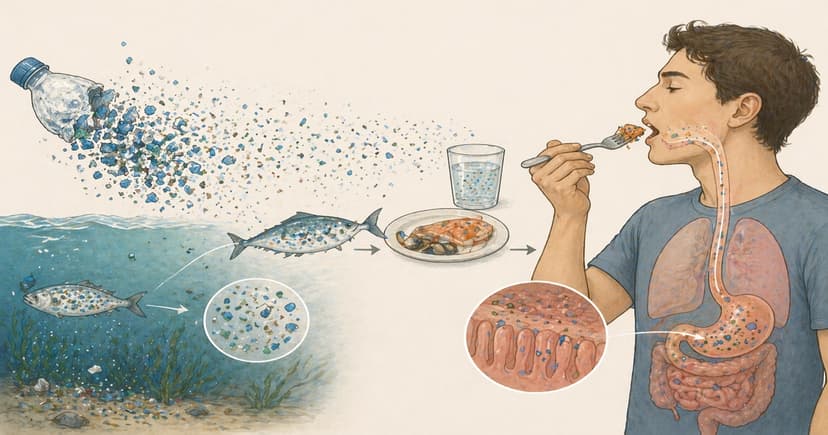
Built on science, not guesswork
Every particle estimate in this calculator is derived from peer-reviewed studies published in journals including Environmental Science & Technology and Science of the Total Environment. Each answer cites its source and confidence level.